Image Credits: meisterdrucke.ie
A recent article in the Racing Post’s Good Morning Bloodstock newsletter provides an intriguing statistical analysis of inbreeding effects on thoroughbred performance. Drawing from a dataset of over 36,000 runners, it concludes by suggesting that when it comes to inbreeding, we must ask ourselves: “Do I feel lucky?”
While this comprehensive study makes valuable contributions to our understanding of breeding patterns, the methodology and conclusions invite deeper reflection on how we approach inbreeding analysis in modern thoroughbred breeding.
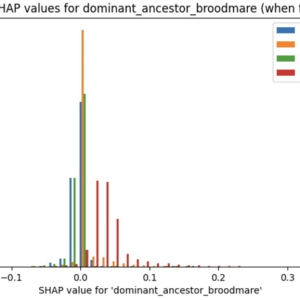
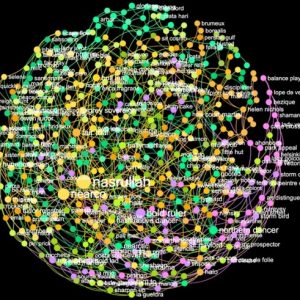
One particularly astute observation explores the significance of which specific ancestors appear in duplicate positions rather than just focusing on how recently they appear in a pedigree. This aligns with our analysis of over a million horses, independently identifying the differential impact of specific ancestors when they appear multiple times in a pedigree.
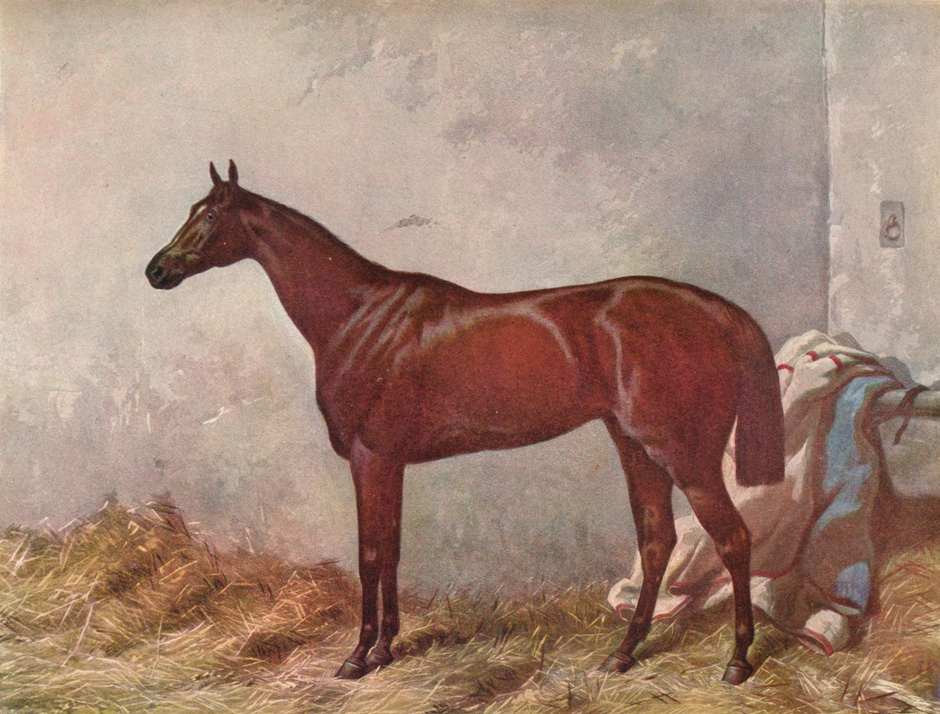
However, the newsletter dismisses linebreeding as ‘rubbish’ contradicting peer-reviewed research. For example, Todd et al. (2018) found in their study of 135,572 Australian thoroughbreds that “multiple generations of inbreeding for selection can have positive effects on the overall genetic value of a population.” The article’s use of the historical stallion Hermit (pictured) to argue against linebreeding, citing his supposed ongoing influence on bleeding traits, appears unsupported by comprehensive genetic analysis. Todd’s research identified that “ten ancestors accounted for, on average, over 80% of the IBD alleles in modern Australian Thoroughbreds”, with Hermit notably absent from this list of significant contributors.
Rather than viewing inbreeding as a binary choice – accepting or rejecting it based on statistical correlations – modern data analysis suggests it should be considered one of many features in a complete model of thoroughbred performance and pedigree. This is particularly relevant for individual decision-making, whether selecting a mating partner for a specific mare or evaluating a foal or yearling at the sales. Data science approaches that can integrate multiple factors simultaneously will offer more nuanced insights than traditional single-factor analyses.
The future of breeding analysis lies not in luck, nor simple acceptance or rejection of inbreeding, but in developing more sophisticated models that can capture the full complexity of genetic interactions. While close inbreeding deserves careful consideration, dismissing the potential significance of more distant genetic patterns may prevent us from fully understanding the intricate mosaic of thoroughbred genetics.
Combining empirical evidence with sophisticated analytical tools allows us to move beyond simple rules of thumb to develop more effective breeding strategies.