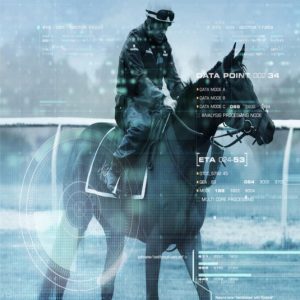

Horse racing has long been an industry driven by tradition, intuition and years of expertise passed down through generations. But Spencer Chapman, co-owner of Equine Match, believes the future of the sport lies in a powerful combination of AI and data analytics.
Chapman, whose family has been involved in horse breeding for generations, has seen the industry evolve in recent years. He recalls how horse breeding and training used to rely heavily on the instinct of experts who could spot potential in a horse that others might miss. However, Chapman believes that the wealth of data now available can allow for better predictions about a horse’s future performance.
There’s a natural resistance to change in any industry, but the truth is artificial intelligence is here to stay, and those who embrace it will have a competitive edge.
AI is changing the way we understand and predict a horse’s future in the sport,” he says. “By analysing not just the horse itself but its entire bloodline – including sires, dams, and progeny – we can make highly accurate predictions about its potential performance.
Equine Match uses a data-driven approach to predict a horse’s potential by examining the racing history of its ancestors. By analysing thousands of data points, the system can supposedly forecast with up to 95 percent confidence how a horse will perform at all levels of racing. It’s a tool that helps industry professionals make decisions based on robust data rather than relying solely on the often subjective opinions of agents and trainers.
One of the key features of Equine Match’s approach is its ability to incorporate a horse’s lineage into the prediction model. Chapman explains that this isn’t just about looking at the horse’s parents, but understanding the broader family history – how past horses in the bloodline performed and how that might translate to future success.
“There’s a natural resistance to change in any industry, especially one as steeped in tradition as horse racing. But the truth is, AI is here to stay, and those who embrace it will have a competitive edge,” Chapman says. “We’re seeing that with some of the more forward-thinking companies who are already reaping the benefits.”
One of the major challenges, however, is balancing technology with the human element that still plays a crucial role in the sport. Chapman acknowledges that while AI and data analytics are powerful tools, they are not enough on their own.
“There’s no replacing the expertise of a seasoned trainer who knows their horses inside and out. But AI allows them to make more informed decisions, helping them spot patterns and opportunities that might otherwise go unnoticed,” he explains. “It’s about using technology to enhance human judgment, not to replace it.”
With companies like Equine Match leading the charge, AI may swiftly revolutionise how the racing industry approaches talent identification. It’s part of a quiet revolution that may see the most accurate identification of future champions of the sport working from algorithms instead of bookmakers or scouts. As Chapman puts it, “This is just the beginning. The more data we gather, the more accurate our predictions will become. And that means better horses and a brighter future for the sport.”