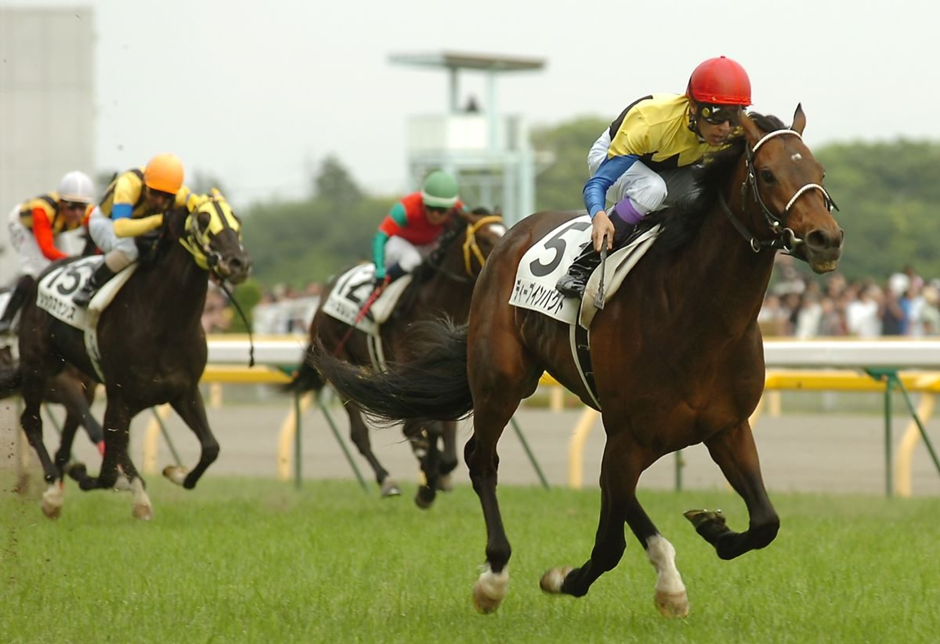
Photo of Deep Impact winning the Japanese Derby. Credit: Japan-Forward
Here’s a fascinating fact about the Japan Cup: the last European winners – Pilsudski, Singspiel, Falbrav, and Alkaased – were genuine champions, among the best middle-distance horses of their era. Yet today, even Europe’s finest can’t get close to victory in Tokyo. More than forty European challengers have tried and failed, including repeated attempts from racing powerhouses like Ballydoyle, Godolphin, and some of Europe’s most accomplished trainers.
The Evolution of a Specialist Championship
The Japan Cup’s transformation from international invitational to specialist examination is written in the results. In the 1980s and early ’90s, European stayers could compete effectively through pure stamina and class. Today, the race demands something different – a blend of tactical speed and stamina that most European challengers simply don’t possess.
Take the attempts since Alkaased’s victory in 2005. The pattern is telling. Multiple Cup and King George winners, Irish Derby winners, even an Arc winner – all have fallen short. But it’s not just that they’ve lost; it’s how they’ve lost.
European raiders typically struggle with Tokyo’s unique demands. Time after time, we’ve seen proven Group 1 performers unable to quicken when it matters. Red Cadeaux, a global campaigner who won everywhere from Hong Kong to Australia, found his stamina-based approach ineffective. Capri and Idaho, both Irish Derby winners, couldn’t adapt to the pace demands. Even Ouija Board, one of the great international campaigners, couldn’t make the necessary tactical adjustments.
The Stoute-Cumani Blueprint
This makes the achievements of Sir Michael Stoute and Luca Cumani even more remarkable. Between them, they trained four of the last five European winners. Their success wasn’t about finding a single winning formula – their victorious raiders showed different running styles and came from diverse bloodlines. What united them was balance.
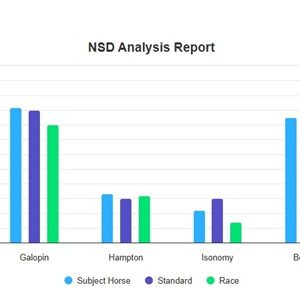
Through analyzing the deep pedigree influences of every Japan Cup runner since 1983, we’ve uncovered patterns that might explain their success. Our Vuillier Score quantifies six foundation sire influences that shape every thoroughbred’s aptitude. Think of it like a genetic recipe – you need exactly the right balance of ingredients.
When we analyze those Stoute-Cumani winners, we see something fascinating. Despite being champions, they showed notably different individual profiles. What united them wasn’t a specific pattern of influences, but rather equilibrium. None showed the extreme stamina bias we often see in today’s European raiders.
The Japanese Evolution
While European breeding has maintained its traditional emphasis on stamina, Japanese programs have evolved specifically to meet this race’s demands. The results are clear – modern Japanese champions can sustain high cruising speeds and still produce devastating turns of foot. They’re not just staying the trip; they’re dominating it through controlled pace and tactical adaptability.
Deep Impact’s victory in 2006 marked a turning point. His progeny – including dual winner Gentildonna and champion Contrail – showcased this new prototype. They combined stamina with the tactical speed to position effectively and the ability to quicken off any pace.
Most European challengers arrive with pedigree profiles tilted heavily toward stamina influences – profiles that worked brilliantly at home but proved suboptimal in Tokyo. They can stay the trip but lack the tactical tools to win it.
Breaking the Pattern?
This brings us to Auguste Rodin. As the first European-trained Deep Impact runner to contest a JRA Grade 1, he naturally draws attention. But our analysis shows something more significant: his pedigree profile matches the balanced pattern we identified in those last successful European raiders.
This balance is crucial. The Japan Cup isn’t won through stamina alone. Success requires the ability to:
- Maintain position through early tactical stages
- Sustain speed around Tokyo’s sweeping turns
- Produce a decisive turn of foot
- Finish strongly through the uphill run to the line
Most European challengers excel at the last requirement but struggle with the first three. Our analysis of 20+ generations of pedigree data suggests Auguste Rodin might have the full toolkit.
The Reality Check
The home team still holds most of the aces. Japanese runners have evolved specifically to meet this race’s demands. But for the first time in a decade, we’re seeing a European challenger whose underlying pedigree influences actually fit the Japan Cup template. Auguste Rodin isn’t just bringing his sire’s genes to Tokyo – he’s bringing the kind of balanced profile that characterized those last successful European raids.
Will it be enough? That’s why they run the races. But after years of watching European challengers arrive with the wrong profile, we finally have one with the right genetic recipe – a pattern that only emerges when you analyse more than 20 generations of pedigree data. [At Equine Match, we combine Colonel Vuillier’s foundational principles with modern mathematical modelling to analyse and predict thoroughbred performance. Our Vuillier Score quantifies deep pedigree patterns that have proven predictive of racing class and aptitude.]