When Europe’s superstar City of Troy lines up at Del Mar this Saturday, he’ll add another fascinating chapter to one of racing’s most compelling challenges – the attempt to translate elite European turf form to dirt at the highest level. As Aidan O’Brien’s latest challenger, he continues a pursuit that has seen some of Ballydoyle’s finest test themselves in the Classic.
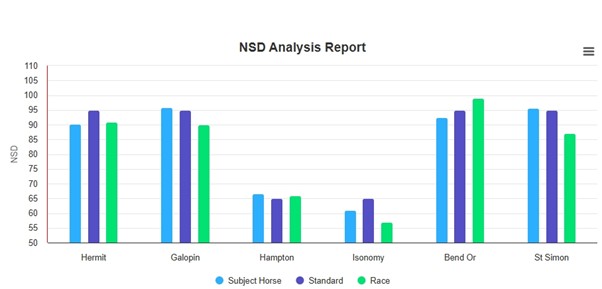
The Equine Match Vuillier Dosage System – which measures six foundation sires’ influence in every thoroughbred’s pedigree – reveals remarkable consistency in O’Brien’s Classic challengers while suggesting why this particular mountain has proven so difficult to climb.
City of Troy’s deep ancestral Correlations:
Churchill (2017): 0.955 correlation (RPR 125)
Gleneagles (2015): 0.952 correlation (RPR 124)
Mendelssohn (2018): 0.947 correlation (RPR 120)
This consistency tells a story of deliberate pattern, not coincidence. Yet City of Troy (RPR 129) brings a new level of proven ability compared to previous 3yo challengers, suggesting the possibility of transcending these historical limitations.
The Historical Parallel:
Intriguingly, City of Troy shows a 0.912 correlation with Sakhee, who came agonisingly close to Classic glory in 2001, beaten just a nose mere weeks after demolishing the Arc field by six lengths. At his peak rating of 135, Sakhee attempted this as a fully mature 4yo, the same year City of Troy’s damsire Galileo (RPR 132) finished sixth as a 3yo – a telling reminder of both the challenge’s complexity and its tantalising possibilities.
Key Profile Indicators:
Bend Or: 92.5 (Classic winners average 97.4)
Isonomy: 61.1 (Classic winners average 57.7)
St Simon: 95.7 (Classic winners average 88.7)
These pedigree markers have historically proven crucial determinants of dirt adaptability, yet O’Brien’s team has consistently refined their approach to managing this surface transition. This year they even shipped their star turn for an away day at Southwell’s dirt track.
What makes this year’s attempt particularly intriguing is how it represents years of accumulated experience with similar profiles. The genetic patterns suggest City of Troy faces the same fundamental challenge as his predecessors, but he brings a level of proven ability that sets him a little apart from previous Ballydoyle 3-year-old challengers. While his Racing Post Rating of 129 already exceeds the pre-race marks of Churchill, Gleneagles, and Mendelssohn, Saturday’s race presents not just a test of talent versus surface but the possibility of witnessing how years of refined approach, combined with exceptional ability, might help overcome genetic predisposition.