As the 2025 Saudi Cup approaches with its $20 million purse, maintaining its position as the world’s richest race, it represents the latest chapter in a fascinating century-long evolution of racing’s most valuable prize. From Epsom’s Derby, where 1925 winner Manna earned £11,095 for Shanghai-based bullion broker Henry E. Morriss, through American innovations like the Arlington Million, to Dubai’s emergence in the late 1990s, the title of “world’s richest race” has always reflected broader economic and geopolitical shifts.
The transition from Epsom’s dominance mirrors the British Empire’s decline, while America’s ascendancy saw pioneering million-dollar purses emerge. Even two-year-old races held the crown – the Belmont Futurity, Garden State Stakes, and Arlington-Washington Futurity all claimed the title of world’s richest race, highlighting how American racing’s financial muscle shaped the global calendar through much of the 20th century.
While Saudi Arabia currently leads with the Saudi Cup, the region’s racing powers are positioned to make bold moves. Qatar, already a significant force through Arc sponsorship, has demonstrated its sporting ambitions through Formula 1, FIFA World Cup hosting, and PSG ownership. Dubai, which pioneered mega-purses through the World Cup, remains a formidable force with the infrastructure and ambition to reclaim its crown.
Yet Abu Dhabi emerges as a compelling dark horse. Sheikh Mansour’s recent acquisition of historic Fresnay-le-Buffard, home to 45 European Classic winners, signals serious racing ambitions backed by the emirate’s sovereign wealth. His strategic approach – evidenced by his investment in Manchester City FC- suggests the capability and willingness to make transformative investments in other sports, including thoroughbred racing.
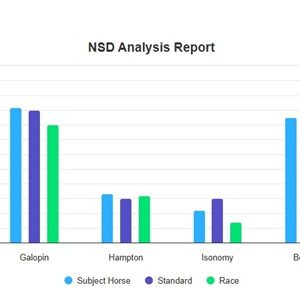
For tomorrow’s Saudi Cup in Riyadh (Saturday, February 22), while Japanese star Forever Young and the world’s highest earner Romantic Warrior dominate early markets, French challenger Facteur Cheval presents an intriguing proposition. Our analysis of his pedigree reveals an ideal balance of attributes for dirt racing, supported by an impressive surface debut at Meydan, where he showed he could adapt to both kickback and deep going. The Saudi Cup’s one-turn configuration might suit him better than Meydan’s two turns, with his proven class as a Dubai Turf winner suggesting he has the quality to challenge for racing’s richest prize.
Just as the Derby’s financial dominance reflected the British Empire’s peak and American races’ supremacy mirrored post-war prosperity, today’s Gulf-centred competition for racing’s richest prize reflects ongoing shifts in global economic power. The progression to today’s $20 million showcases racing’s evolution as an international sport. Whether from Saudi Arabia, Qatar, Dubai, or Abu Dhabi, the next dramatic escalation – perhaps to $50 million – seems inevitable.
Image Credit: Saudi Cup